Make functional change easier to understand.
GHBI™ develops health technology to bring clinical documentation, functional observations and movement education into clearer workflows. Founded by practicing chiropractor Dr. Ricardo Alejandro Rodríguez-Vázquez, the company is building tools for providers and individuals, with capabilities, availability and evidence assessed separately for each product.
A shared focus on function
Our founder’s vision is to use biomechanics as a common language across disciplines to describe movement and follow functional change over time.
Different tools. A shared focus on function.

GHBI EMR™
Clinical documentation and practice workflows for healthcare providers. Development focuses on reducing administrative burden and supporting professional review. Explore GHBI EMR
My Functional Journey™
Structured functional captures and comparisons over time. Accuracy, repeatability and the meaning of observed change remain evaluation priorities. Explore My Functional Journey
GHBI Smart Rehab™
Movement education and progress tracking in development, with an independent public pathway and a planned provider-connected pathway. Explore Smart Rehab
A product demonstration does not confirm general commercial availability. Ask about the version, capabilities and access relevant to your organization. Integration between GHBI products and interoperability with third-party systems are separate development milestones.
Explore the right opportunity
Providers & clinic owners
Explore clinical documentation and functional workflows. Request a demonstration
Research & technology
Help evaluate measurement quality, longitudinal interpretation and workflow usability. Discuss collaboration
Investors
Review the initial buyer, product maturity, evidence priorities and proposed revenue model. Explore the investment overview
From point A to point B
Functional observations are useful when capture conditions, session context and measurement consistency are preserved. An observed difference alone does not establish which treatment caused it.

AI tools for the work around you
Two products in development. Explore the direction and tell us where your team needs support.
 Coming soon!!!
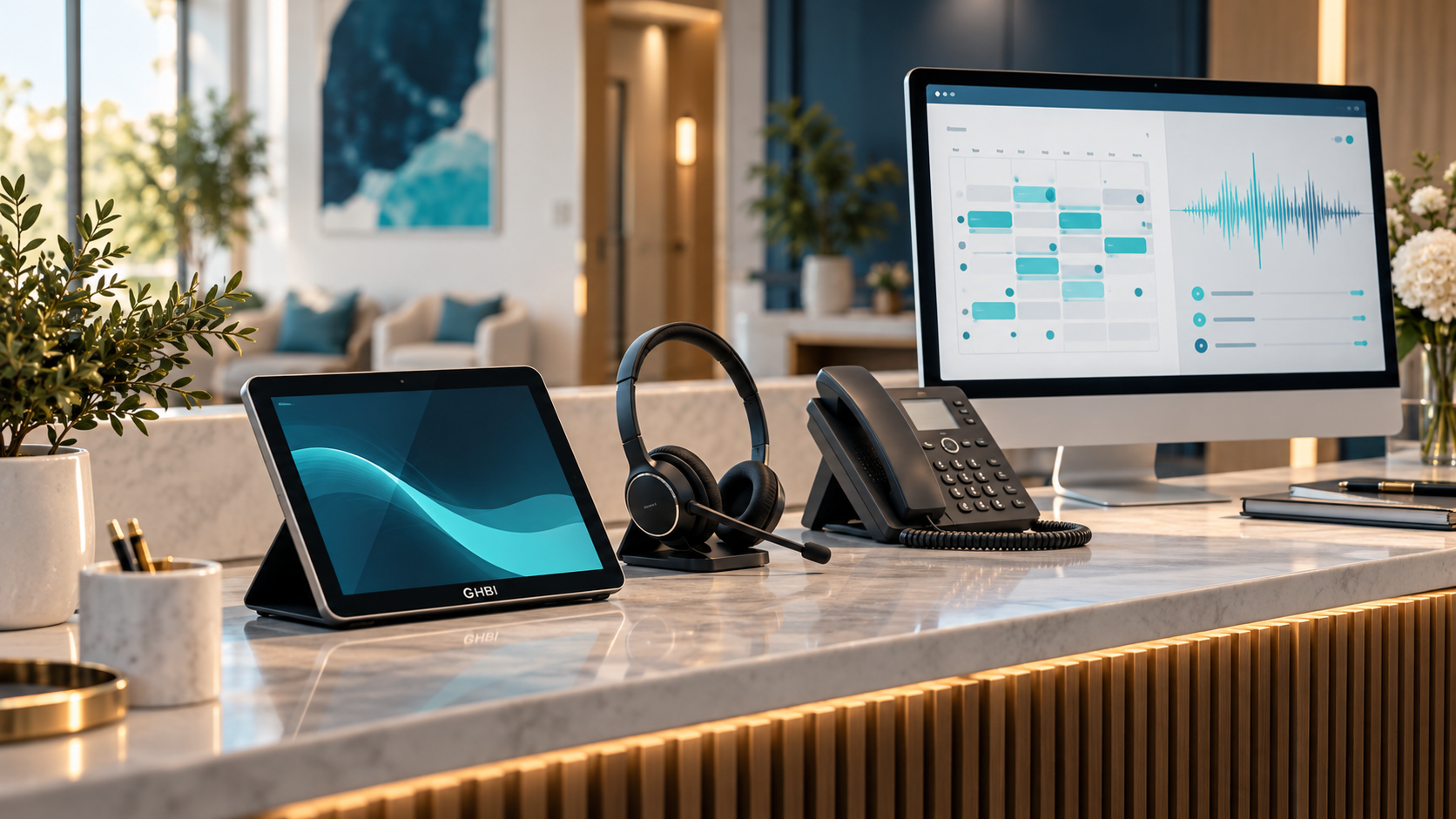
GHBI AI Receptionist™
A digital reception product in development for calls, communication follow-up and appointment workflows with a connected, authorized calendar.
Recepción digital en desarrollo para llamadas, seguimiento y citas con una agenda conectada y autorizada.
Concept image · Imagen conceptual
 Coming soon!!!
GHBI AI Assistant
A personal and business assistant workspace in development for documents, priorities and project continuity, with source-aware review.
Espacio de asistencia personal y empresarial en desarrollo para documentos, prioridades y continuidad de proyectos, con revisión de fuentes.
Concept image · Imagen conceptual
Founder-led development
Development combines the founder’s direct clinical work with engineering in a small team. Independent validation and evidence of buyer value are priorities for further development.
Meet the teamCreator technology & education
GHBI Teleprompter is a separate creator product for presentation and recording workflows. GHBI Books and professional education support the company’s educational work.
GHBI Teleprompter Books & resourcesEspañol — Comprender mejor el cambio funcional
GHBI™ desarrolla tecnología en salud para organizar la documentación clínica, las observaciones funcionales y la educación sobre movimiento en procesos más claros. Fundada por el quiropráctico en ejercicio Dr. Ricardo Alejandro Rodríguez-Vázquez, la compañía desarrolla herramientas para profesionales y personas, evaluando por separado las capacidades, disponibilidad y evidencia de cada producto.
La visión de nuestro fundador es utilizar la biomecánica como lenguaje común entre disciplinas para describir el movimiento y seguir el cambio funcional a lo largo del tiempo.
GHBI EMR™
Documentación clínica y procesos de consulta para proveedores de salud. El desarrollo busca reducir la carga administrativa y apoyar la revisión profesional.
My Functional Journey™
Capturas funcionales estructuradas y comparaciones a lo largo del tiempo. La precisión, la repetibilidad y el significado del cambio observado requieren evaluación adicional.
GHBI Smart Rehab™
Educación sobre movimiento y seguimiento del progreso en desarrollo, con una vía pública independiente y otra prevista de conexión con el proveedor.
Una demostración no confirma disponibilidad comercial general. Consúltenos sobre la versión, las capacidades y el acceso pertinentes para su organización. La integración entre productos GHBI y la interoperabilidad con sistemas de terceros son hitos de desarrollo distintos.
Proveedores: solicite una demostración. Investigadores y socios tecnológicos: proponga una colaboración. Inversionistas: consulte el problema, la madurez, la evidencia y los hitos previstos.
Iniciar una conversación