Plantar Heel Pain: Look Beyond One Tender Spot
Why the foot, ankle, calf, activity history and gait may need to be examined together.
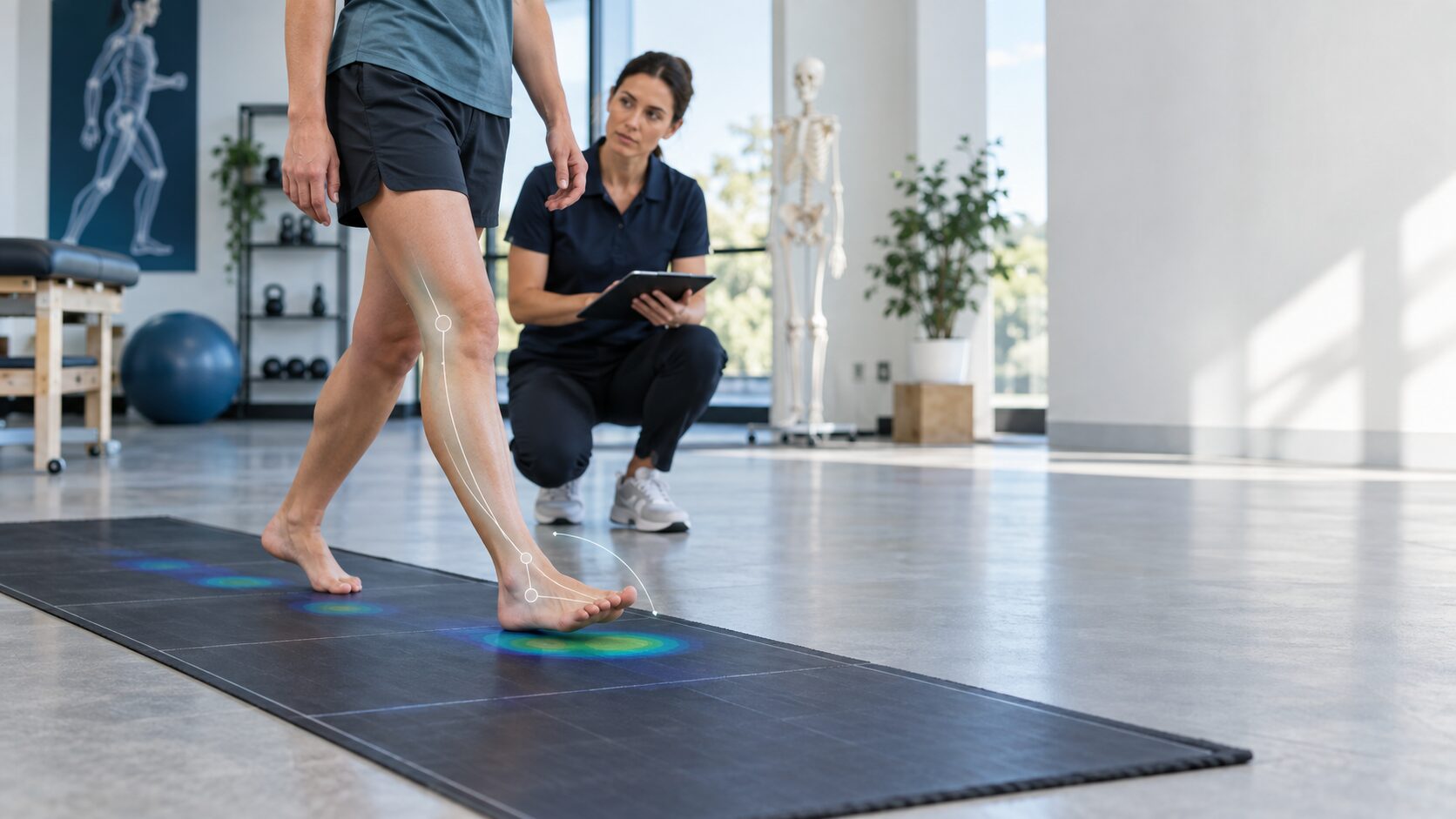
Pain under the heel is often called plantar fasciitis, but a diagnostic label does not automatically identify every factor that matters for recovery. Symptoms may be influenced by a recent change in walking or running, time spent standing, footwear, calf capacity, ankle mobility and how quickly tissue loading increased.
What a whole-chain examination may include
A clinician may examine the precise location and behavior of pain, ankle motion, foot mobility, calf strength and endurance, balance, walking pattern and tolerance for relevant tasks. Screening also helps distinguish plantar heel pain from nerve-related symptoms, stress injury, inflammatory conditions or other causes that may require a different approach.
What current guidance supports
The 2023 heel-pain clinical practice guideline supports plantar fascia–specific and calf stretching, manual therapy directed by findings, and taping for short-term pain and function. Foot orthoses may be useful as part of a broader plan for selected patients, but not as an isolated universal solution. Exercise should progressively restore the capacity needed for walking, work, sport or prolonged standing.
Load management is not total rest
Reducing an aggravating dose temporarily may help, but complete avoidance can lower capacity. A graded plan adjusts frequency, intensity and recovery while monitoring the next-day response. Progress is better judged by meaningful function—such as first-step pain, walking tolerance and calf performance—than by pain alone.
Need an individual evaluation?
Chiropractic & Wellness Center connects your history, examination, movement and goals to a practical plan.
Book onlineWhatsApp 571-255-8333Medical information notice: This article is educational and is not a diagnosis or a substitute for personalized medical care. Seek urgent evaluation for emergency symptoms.
Leave a Reply