From Clinical Observation to Biomechanics Intelligence
This section outlines how real-world clinical biomechanics observation is transformed into structured, data-driven movement intelligence within the GHBI system.

Clinical Biomechanics Integration
Integrating structured clinical observation with scalable biomechanics analytics to objectively interpret posture, movement, and load adaptation patterns.

Data-Driven Movement Patterns
Identifying consistent biomechanical movement patterns through aggregated observational data, enabling objective analysis of functional trends across populations.

Intelligent Biomechanics Platform
Applying intelligent algorithms to interpret movement behavior, load distribution, and functional efficiency, supporting proactive biomechanical insight and system-level decision support.
.
Addressing Core Challenges in Human Biomechanics
This section highlights recurring biomechanical challenges observed in real-world movement and explains the structural gaps that limit traditional assessment approaches.
Integration of Clinical Biomechanics Observation
Translating structured clinical observation of posture, movement, and load adaptation into consistent biomechanical interpretation frameworks.
Limitations of Traditional Movement Assessments
Traditional movement evaluations are often subjective, fragmented, and unable to capture longitudinal biomechanical adaptation across daily activity, injury, and workload.
Advancing Intelligent Biomechanics Analysis
Applying intelligent systems to recognize movement patterns, asymmetries, and load behaviors that are not detectable through isolated observation.

Collaborative Research and Innovation
Supporting future collaboration with institutions and organizations focused on biomechanics, movement science, and data-driven understanding of human function.
Foundational Scope of Biomechanics Intelligence
This section outlines the scope, scale, and foundational observations that inform the development of the GHBI biomechanics intelligence system.
Clinical Observation Foundation
Built upon extensive real-world clinical biomechanics observation across diverse populations, activities, and functional demands.

Recurring Biomechanical Patterns
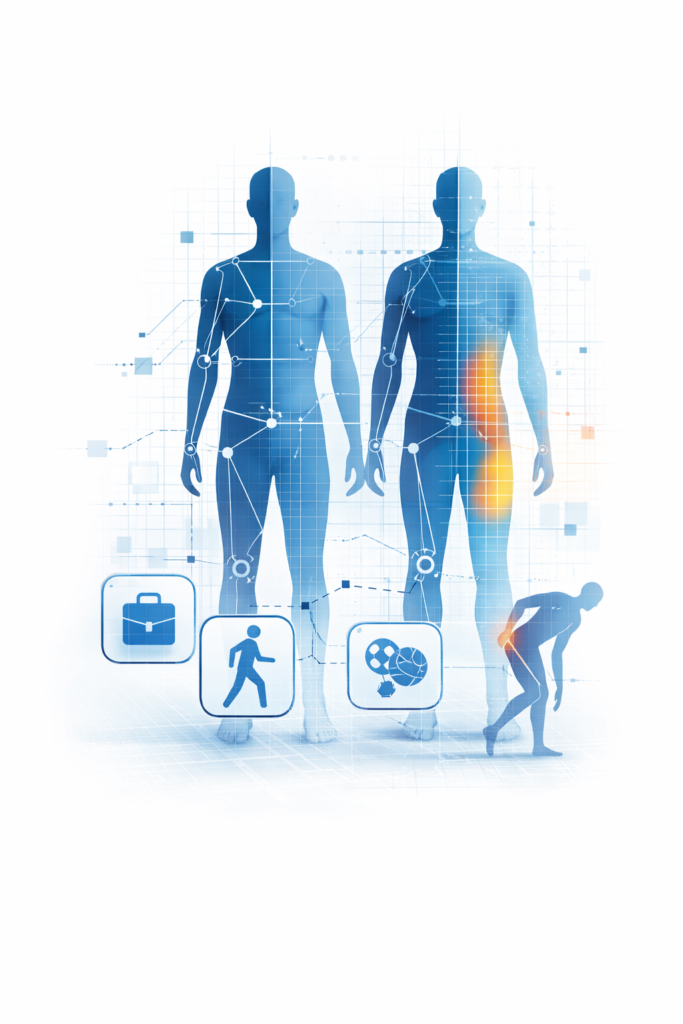
Identification of consistent movement, posture, and load adaptation patterns observed across daily activity, occupational stress, sports, and injury recovery.
Scalable Biomechanics Intelligence Framework
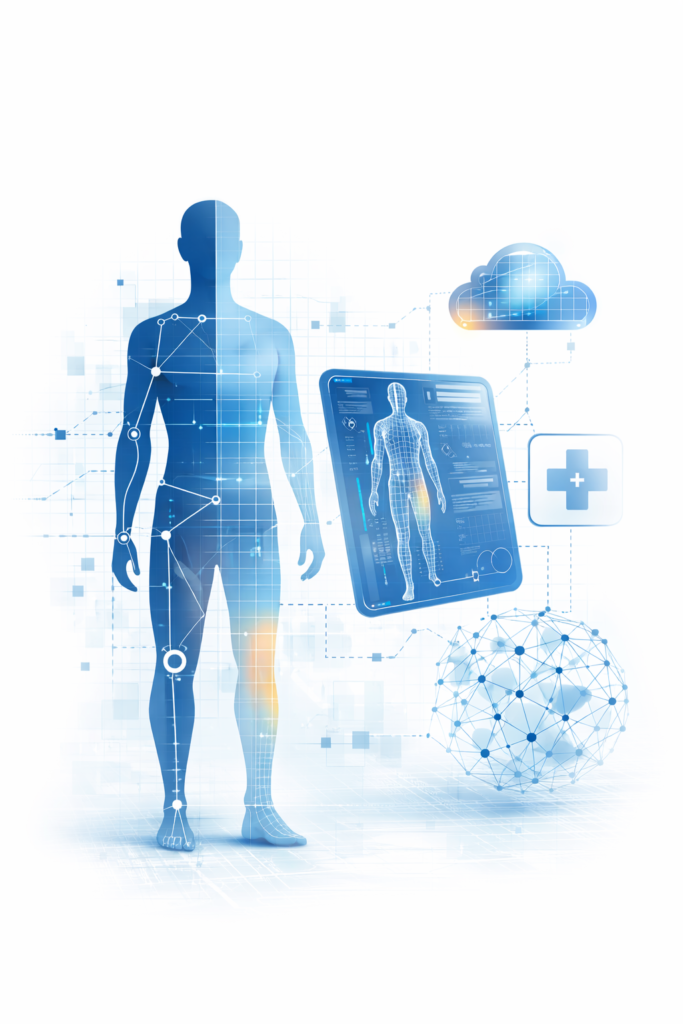
Translating years of structured observation into a scalable biomechanics intelligence architecture designed for future data integration and analysis.
Explore Research & Clinical Insights
This section highlights applied biomechanics insights derived from structured observation and system-level analysis of human movement.
Clinical Biomechanics
Explore foundational biomechanical observations derived from structured analysis of posture, movement, and load adaptation.
Intelligent Movement Analysis
Understand how intelligent systems transform biomechanical observation into scalable movement insight.
Collaborative Research
Explore collaborative initiatives focused on advancing biomechanics intelligence and movement science.
Research Direction & Future Development
GHBI is designed as a continuously evolving biomechanics intelligence system. Ongoing development focuses on expanding observational datasets, refining analytical models, and supporting future research collaborations across healthcare, performance, and occupational domains.
- Expansion of biomechanics intelligence models
- Longitudinal movement pattern tracking
- Academic and institutional collaboration pathways
- Scalable research architecture under development

Research Partnerships & Institutional Collaboration
GHBI welcomes collaboration with academic institutions, research organizations, and industry partners interested in advancing the understanding of human biomechanics through system-level, data-driven intelligence frameworks.